Old English Creations

Crochet Your Calm and Create with Joy


Know Your Dream Customer

Your Dream Customer

Hook Day

The Day It All Begins

The moment you pick up your first crochet hook, your journey begins. The day before, you may never have given crochet a second thought, but now, you’ve entered a world filled with texture, creativity and endless possibilities. From that moment forward—let’s call it Hook Day—you are a crocheter, no matter your skill level.

Transition

Some people crochet as a relaxing hobby, while others take their passion a step further and turn it into a business. Whether it takes weeks, months, or even years to make that transition, the important thing is that it’s possible. But before diving into selling your work, there are key things to consider.

Running a crochet business is more than just making beautiful pieces—it’s about selling something that people want. That could be:


  • Handmade crochet goods
  • Crochet patterns and designs
  • Teaching crochet skills through classes or tutorials
  • Selling crochet supplies
  • A mix of these options


The secret to success is finding the right balance between what you love to create and what others are eager to buy.
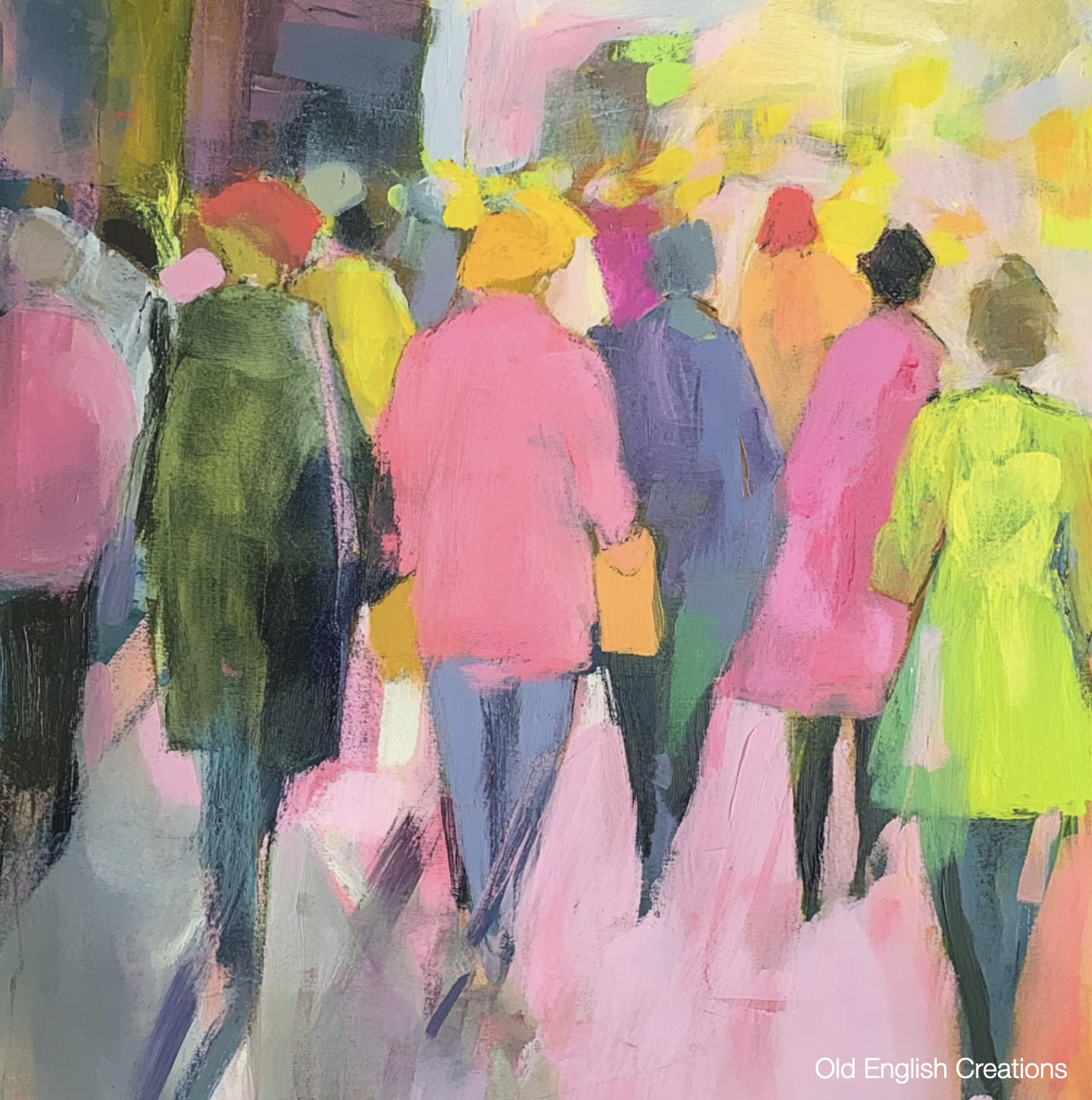
dream-customer-crowd

Finding Your Dream Customer

Someone? Anyone? No one?

In the beginning, you might think that anyone willing to buy your crochet is your dream customer. While it’s tempting to sell to everyone, defining your ideal customer will help focus your efforts and maximize success.

Audience

As crocheters, we only have so much creative energy each day. Wasting it on the wrong audience or products that don’t sell can be discouraging. Knowing who your dream customer is will help you:

  • Make smarter product choices – Craft items that people actually want

  • Market more effectively – Speak directly to the right audience

  • Save time and effort – Focus on projects with real potential

Who Is Your Dream Customer?

Ask yourself:

  • Who do I want to crochet for?
  • Do they prefer practical items (hats, scarves, blankets) or decorative ones (wall hangings, amigurumi, doilies)?
  • Are they complete beginners looking for easy patterns, or advanced crocheters who want complex designs?
  • Are they shopping for themselves or looking for gifts?


Your dream customer could be:

  • Individuals: People looking for unique, handmade gifts or cozy accessories

  • Shops and Boutiques: Local businesses that want to stock your items

  • Wholesalers: Companies that buy in bulk and resell

What to Sell?

Once you’ve defined your customer, it’s time to decide what you’ll offer. Some common crochet business models include:

Selling Physical Crochet Goods

You can sell handmade crochet products such as:

  • Hats, scarves and gloves
  • Baby blankets and booties
  • Amigurumi toys
  • Home décor like pillows and wall hangings

Selling Digital Crochet Products

If you prefer designing over making finished products, consider selling digital items:


  • Crochet patterns (written or charted).
  • eBooks with step-by-step tutorials.
  • Video courses teaching crochet techniques.
  • Selling Crochet Kits and Supplies.


Some customers love the idea of making things themselves but need guidance.

You can sell:

  • Beginner crochet kits (with yarn, a hook and a simple pattern).
  • Curated yarn packs for specific projects.
  • Exclusive stitch tutorials.


You might even choose a mix of these options depending on what excites you the most.

Where to Sell?

Your selling strategy will depend on whether you offer physical or digital products.

Selling Physical Crochet Items

  • Locally: Selling to people in your neighborhood

  • Shops and Boutiques: Placing your items in local retail stores

  • Craft Fairs and Markets: Selling in person at local and regional events

  • Online Stores: Selling via platforms like Etsy, eBay, or your own website

Selling Digital Crochet Items

If you sell patterns, eBooks, or videos, your audience is worldwide. Digital products are best sold on:

  • Etsy: A great platform for digital downloads

  • Ravelry: A crochet and knitting marketplace

  • Your Own Website: Selling directly to your audience


Since digital items don’t require shipping, they offer passive income, meaning you can earn while you sleep.

Understanding Your Market

Who and Where?

A key part of running a successful crochet business is knowing where your customers are.

Where Are Your Customers?

  • Local: You sell in person within your neighborhood.
  • Regional: You travel to events or shops within a few hours’ drive.
  • National: You ship your handmade items across the country.
  • International: You sell online to customers around the world.

Who Are Your Customers?

Your ideal customers could be:

  • Everyday buyers looking for cozy, handmade accessories.
  • Mothers and caregivers looking for baby blankets and gifts.
  • Fashion lovers who want trendy crochet wear.
  • Crafters and DIYers who want patterns and supplies.

Matching Your Products to Your Customers

If you sell winter hats, do you live in a cold climate? If not, you may need an online store to sell to cold regions like Canada or northern Europe.

If you focus on beachwear like barefoot sandals, is your audience in warmer climates?

If you sell baby items, are you reaching new parents, grandparents, or gift buyers?

Knowing these details helps you create and market products more effectively.


“When you know who your customer is,

it tells you where to expend your creative and promotional effort.”

Seasonal Selling

Managing Stock

If you sell handmade crochet items, keep an eye on the seasons. Stocking winter hats in summer or summer tops in winter may lead to slow sales.

  • Plan seasonal promotions: Offer discounts to clear out stock before the next season
  • Rotate inventory: Keep fresh designs coming in line with the weather

  • Manage cash flow: Don’t tie up money in slow-moving stock

Many crocheters keep ready-to-ship items stored neatly in bags. While this helps organization, be mindful of seasonal demand to avoid unnecessary stockpiling.

Final Thoughts

Building a Crochet Business That Works for You

When I first started, I wish someone had told me how important it was to define my dream customer. It would have saved me time, effort and money.

The truth is, crochet is a business as much as it is an art. Whether you’re selling handmade goods, patterns, or supplies, understanding who you’re selling to and where they are makes all the difference.

So, as you start (or grow) your crochet business, remember:


  • Know your dream customer: What do they want? Where do they shop?

  • Decide what to sell: Handmade goods? Patterns? Tutorials?

  • Choose the right sales channels: Local, online, or both?

  • Adapt with the seasons: Plan ahead to keep sales flowing


With careful planning and a love for your craft, you can turn your crochet passion into a thriving micro-business.

Happy crocheting and happy selling!
 

how-to-start-a-crochet-business

Pin this to read later.

Alison-headshot

Author Bio

Alison is a passionate crochet enthusiast and dedicated business blogger. She combines her love for crafting and entrepreneurship to inspire and connect with others.

With a knack for transforming yarn into beautiful creations and a flair for sharing valuable insights about running a successful crochet business, Alison embodies the perfect blend of creativity and practicality.

Read more about Alison’s crochet journey.

More Articles

If you enjoyed this post and crochet is your thing, you may like some other crochet articles from our blog.
Crocheting on the Go

Crocheting on the Go

Making Space for Crochet Special Places I have a cherished spot in my home that's dedicated to my crocheting. It's where I spend a lot of my creative time. At any given moment, you'll find me working on at least two crochet projects. One of them is usually a...

The Calm Crocheter: Newsletter

The Calm Crocheter: Newsletter

"The Calm Crochet" Newsletter Welcome to the Calm Crocheter Discover the art of crochet as self-care. At Old English Creations, we believe that crochet is more than a craft—it's a soothing ritual that nurtures your mind and spirit. Our Calm Crocheter newsletter is...
5 Basic Crochet Stitches You Need to Know


The Five Basic Crochet Stitches

You can start crocheting very quickly with a few basic stitches.

You may already know how to do the stitches but not know their name.

Or you may know how to do them and their name but not know their abbreviation which is used in crochet patterns.

The third possibility is that you don’t know how to do the stitches and didn’t even know that they had and name let alone a code in patterns.

The five basic crochet stitches are like the crochet alphabet. They are the letters that make up the words (the pattern), and the words when brought together in a certain way can make poetry. Crochet poetry.

There are other advanced crochet stitches as well and we will cover them later.

These stitches are in USA/Canadian crochet terminology which is different to UK/RSA crochet terminology.

There are five simple stitches in crochet; chain, single crochet, double crochet, triple (or treble) crochet and slip stitch.

I will explain each one in turn with pictures.


Chain Stitch

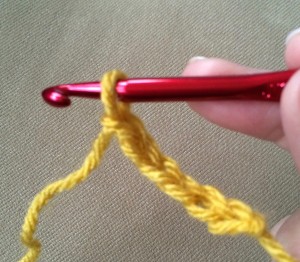
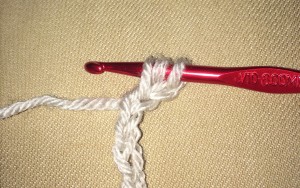
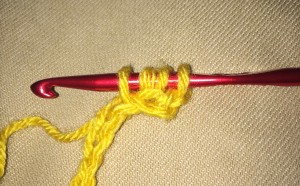
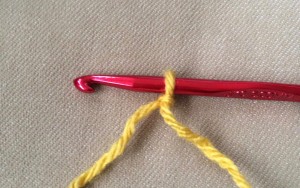
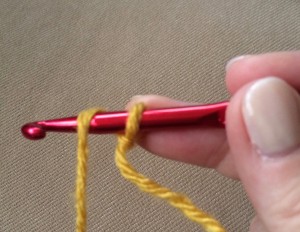
Put a starting loop on you hook and, hold the hook like a pencil (and not a shovel), with your thumb on top and fingers below.

IMG_2380 (1)

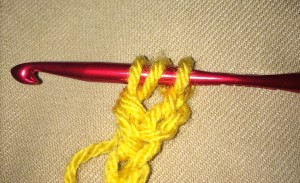
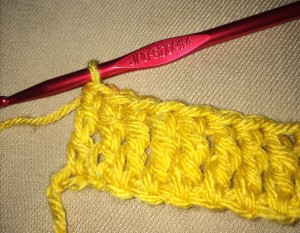
Put the yarn over the hook,

IMG_2381 (1)

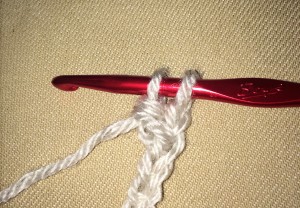
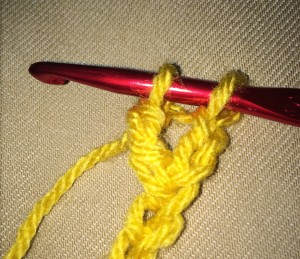
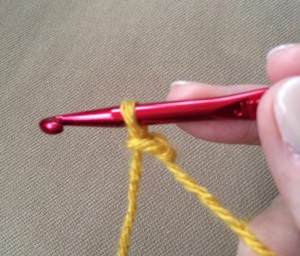
and pull through.

IMG_2382 (1)

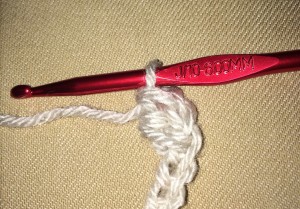
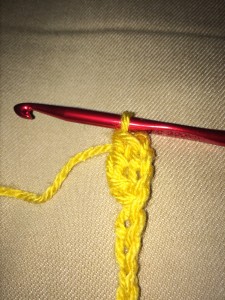
Repeat.

IMG_2383 (1)

This forms a chain and is often used as a base for items in crochet.

If you can get your chain to be even and not too tight this will be the basis for your tension or gauge in later projects.

Practice making a chain in varying thicknesses of wool and with bigger and smaller hooks until you get a smooth rhythm.

This may take a day or two.

In a crochet pattern the code for a chain is ch.


Single Crochet

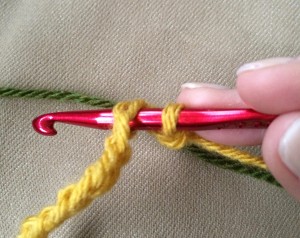
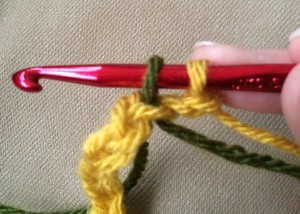
On the chain you just made (in yellow) you can start making rows of different stitches.

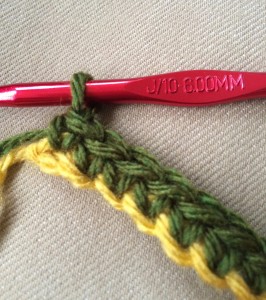
First is the single crochet. This is the smallest crochet stitch and the simplest one to do. I have shown the single crochet in green yarn.

Insert your hook into the chain making sure you go through two threads of the chain (there are three threads for each chain).

IMG_2387

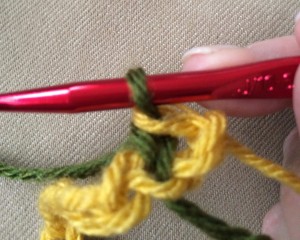
Yarn over your hook and pull through (two loops on hook),

IMG_2388

yarn over and pull through the two loops on your hook (one loop on hook). This image looks a bit mess as it is the first single crochet stitch on the chain but it will get better as you can see below.

IMG_2389

Continue making single crochets across the chain.

IMG_2390

Remember you have completed the stitch when you have only one loop left on your hook. Do not start the next single crochet stitch if you have more than one loop on your hook.

In a crochet pattern the code for a single crochet is sc.


Double Crochet

On a chain we can make double crochet stitches.

Yarn over and then insert the hook into the chain (the two top threads),

IMG_2401

Yarn over and pull through two loops (three loops on hook),

IMG_2404 (2)

Yarn over and pull through two loops on your hook (two loops on hook),

IMG_2406 (1)

yarn over and pull through the last two loops on your hook. Only one loop remains on you hook and the double crochet stitch is complete.

IMG_2407 (1)

In a crochet pattern the code for a double crochet is dc.


Triple Crochet

You can make a triple crochet into the chain you formed or the top of other stitches.

Yarn over twice (three loops on hook), insert your hook into the chain making sure to go through the two threads of the chain, yarn over and pull through (four loops on hook),

IMG_2411 (1)

Yarn over pull through two loops (three loops on hook)

IMG_2412 (1)

yarn over and pull through two loops (two loops on hook),

IMG_2413 (1)

yarn over and pull through last two loops on your hook leaving one loop on your hook and the double crochet stitch is complete.

IMG_2414

IMG_2415 (1)

In a crochet pattern the code for a triple crochet is tc.


Slip Stitch

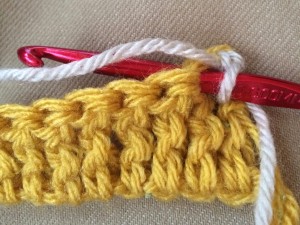
On a base chain or, other row of stitches as we have triple crochets in the image below, insert hook into top two threads of stitches shown below.

IMG_2417 (1)

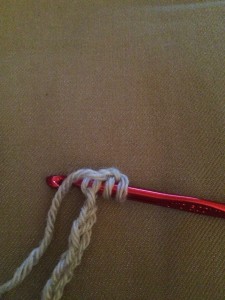
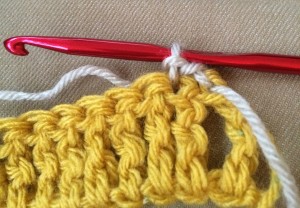
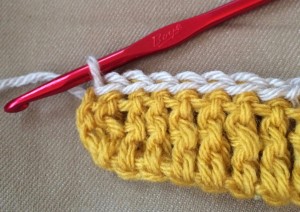
Make sure to pull the thread a bit more than usual (for ease as it can get tight) and pull through the two threads and the loop on the hook in one go (one loop on hook). The slip stitch is in white.

IMG_2418 (1)

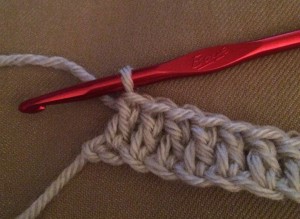
A row of slip stitches when finished is low and flat. A slip stitch can be used to join rows when you work in a circle or to move the hook to a new position in a pattern. It can be used for edging as well.

IMG_2419 (1)

The slip stitch is similar a single crochet but you pull through all the loops at once to keep it low.

In a crochet pattern the code for a slip stitch is ss.

Basic stitches

These form the five basic stitches used in crochet and by combining them in many ways you get patterns of stitches.


Author Bio

Alison Heathcote, a passionate crochet enthusiast and dedicated business blogger, combines her love for crafting and entrepreneurship to inspire and connect with others.

With a knack for transforming yarn into beautiful creations and a flair for sharing valuable insights about running a successful crochet business, Alison embodies the perfect blend of creativity and practicality.

More Articles

If you enjoyed this post and crochet is your thing, you may like some other crochet articles from our blog.

B&G: Blankies and Grannies

B&G: Blankies and Grannies

Author: Alison  -   Updated: March 2025 B&G: Blankies and Grannies The Joy of Crochet B&G? B&G is like the fun code I use for the main things which I create in crochet. Don't get me wrong, I can do all types of crocheting, but when it comes down to it, my...

Crochet Techniques – Chain-less Cast-On Method

Crochet Techniques – Chain-less Cast-On Method

Chainless Cast On Base Chain Foundation Typically the pattern will call for a chain of say, 40 or 100 chains, and the first row is built on the base chain. In the chain-less cast-on method there is no chain.   I have also heard of this being called the chain less...

Wyre Wash Cloth Pattern

Wyre Wash Cloth crochet pattern

Part of the “Refreshing Spa Collection”

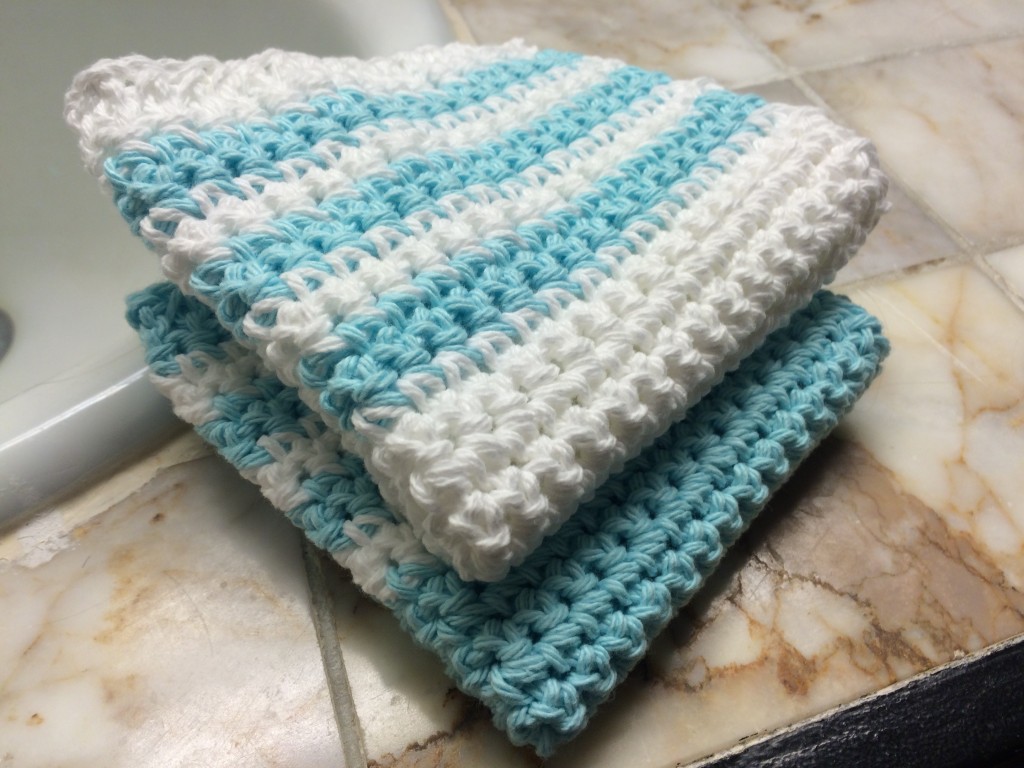
A wash cloth (or flannel as we used to call them) is a soft cotton cloth for use in the bathroom.

Each person in your household should have their own cloth and you can make them in co-ordinating colours to suit your bathroom decor.

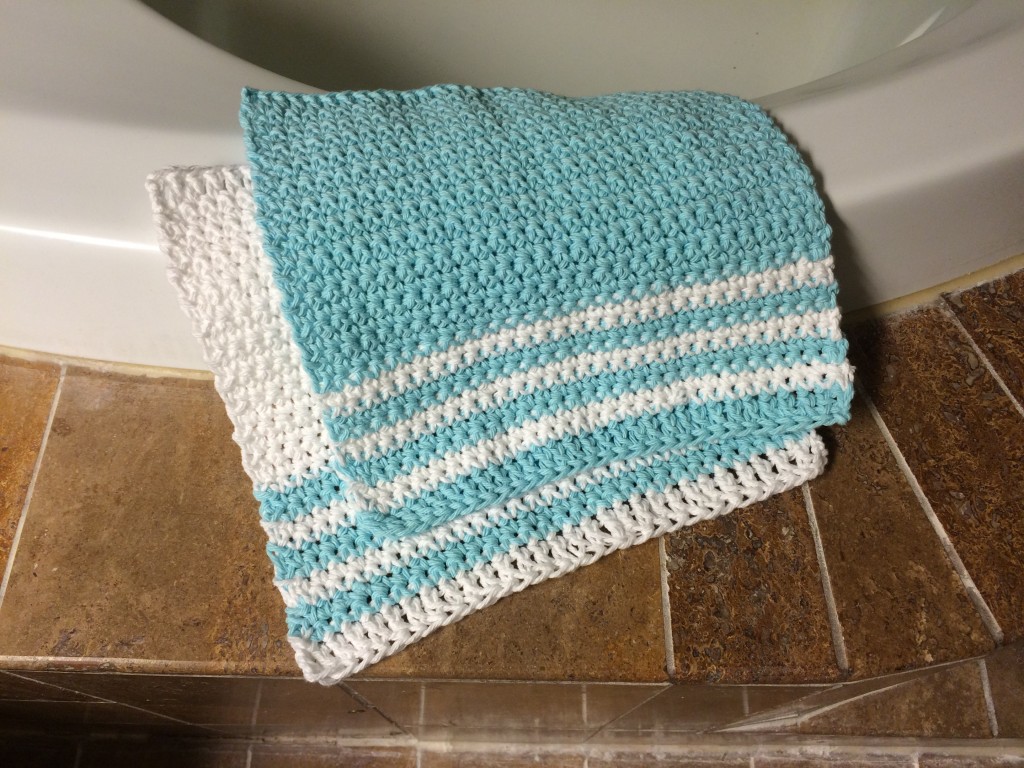
Because we have four children I made a different colour for each child. Our eldest daughter had blue and white, our son brown and white (tip here; brown is a good colour for little boys), second daughter pink and white and the youngest daughter has purple/magenta and white.

Cotton wash cloths can be well – washed in the machine and come back fresh each time.


What you need:

  • Two balls of Bernat Handicrafter Cotton one ball in white and one ball in a contrasting colour this will make two wash cloths as shown in the photo. I have used white and turquoise.
  • 5mm crochet hook.
  • Tapestry sewing needle to sew in the ends.


IMG_2367

This pattern is at the beginner’s level.

IMG_2368

You need to know the following crochet stitches:

  • Chain (ch)
  • Single crochet (sc)
  • Double crochet (dc)

WYRE WASH CLOTH

Wyre wash cloth pattern 2016 COVER-page-001 (1)

Pattern only $2

Buy Now


Share the love

If you love using our original designed pattern, help us grow and please promote, like and share with photos of your finished garment, using the hash tag #OECpattern.

We would love to see your completed creations.


About Old English Creations original crochet patterns

Original designs

All our patterns are Old English Creations original designs created by our talented designers Alison and Lynn.

Each one is technically correct and uses US crochet terminology and not UK crochet terminology.

You can Buy Patterns

Our patterns are sold as a PDF downloads. This means you get a file sent to your computer and not an actual paper pattern. You have to print it yourself.

You can get Free Patterns

We have a few free pattern available and when you get them you can see the quality of our patterns.

You can print them on paper and you can read them on your iPad or phone.


Copyright

Our original patterns may not be reproduced by photocopy, posted on the web or sold without written permission from Old English Creations.

However, you may sell the finished item you created from this pattern.

Please respect the craft of the designers.

cropped-Rose.png


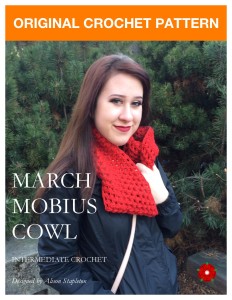
March Mobius Cowl Pattern

March Mobius Cowl pattern

This cowl is worked from a first row base then the work is twisted to form the Mobius. You continue in the round as it takes you over all the edges you work away from the center first row. Once you get going you can see the twist unfolding.

A Mobius strip is a two-dimensional surface with only one side as this pattern which has only one crocheting edge. Named after August Ferdinand Möbius 1790 – 1868.

This cowl uses the puff stitch.

This pattern is at the intermediate level.

You need to know the following stitches:

  • Chain (ch)
  • Single crochet (sc)
  • Double crochet (dc)
  • Puf stitch (ps)

March Mobius Cowl

March Mobius Cowl (1) Cover-page-001

Pattern only $2

[purchase_link id=”2163″ text=”Purchase” style=”button” color=”blue”]


Share the love

If you love using our original designed pattern, help us grow and please promote, like and share with photos of your finished garment, using the hash tag #OECpattern.

We would love to see your completed creations.


About Old English Creations original crochet patterns

Original designs

All our patterns are Old English Creations original designs created by our talented designers Alison and Lynn.

Each one is technically correct and uses US crochet terminology and not UK crochet terminology.

You can Buy Patterns

Our patterns are sold as a PDF downloads. This means you get a file sent to your computer and not an actual paper pattern. You have to print it yourself.

You can get Free Patterns

We have a few free pattern available and when you get them you can see the quality of our patterns.

You can print them on paper and you can read them on your iPad or phone.

How to Use our patterns

You can print most of our patterns in Landscape Orientation, double sided and then fold. This makes it easy to take with you.

Copyright

Our original patterns may not be reproduced by photocopy, posted on the web or sold without written permission from Old English Creations.

However, you may sell the finished item you created from this pattern.

Please respect the craft of the designers.

cropped-Rose.png


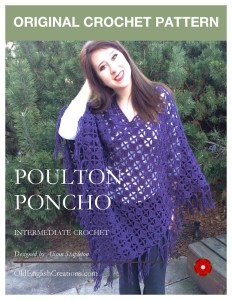
Poulton Poncho Pattern

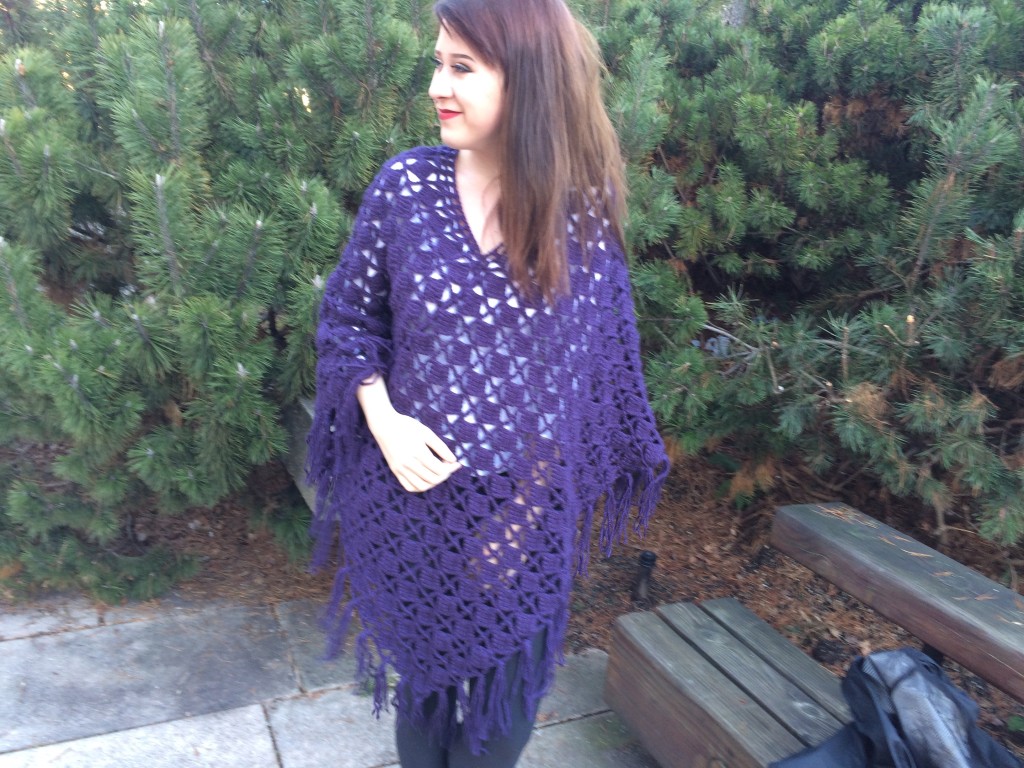
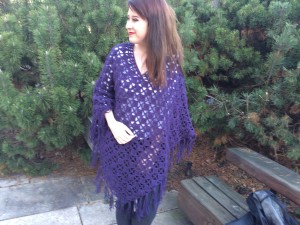
Our Poulton Poncho pattern is now available to buy

We call it the Poulton poncho because it is named after the small town of that name in Lancashire. Well the town’s name is really Poulton-le-Fylde but that seemed like a long name for a crochet pattern.

Designed by Alison Stapleton


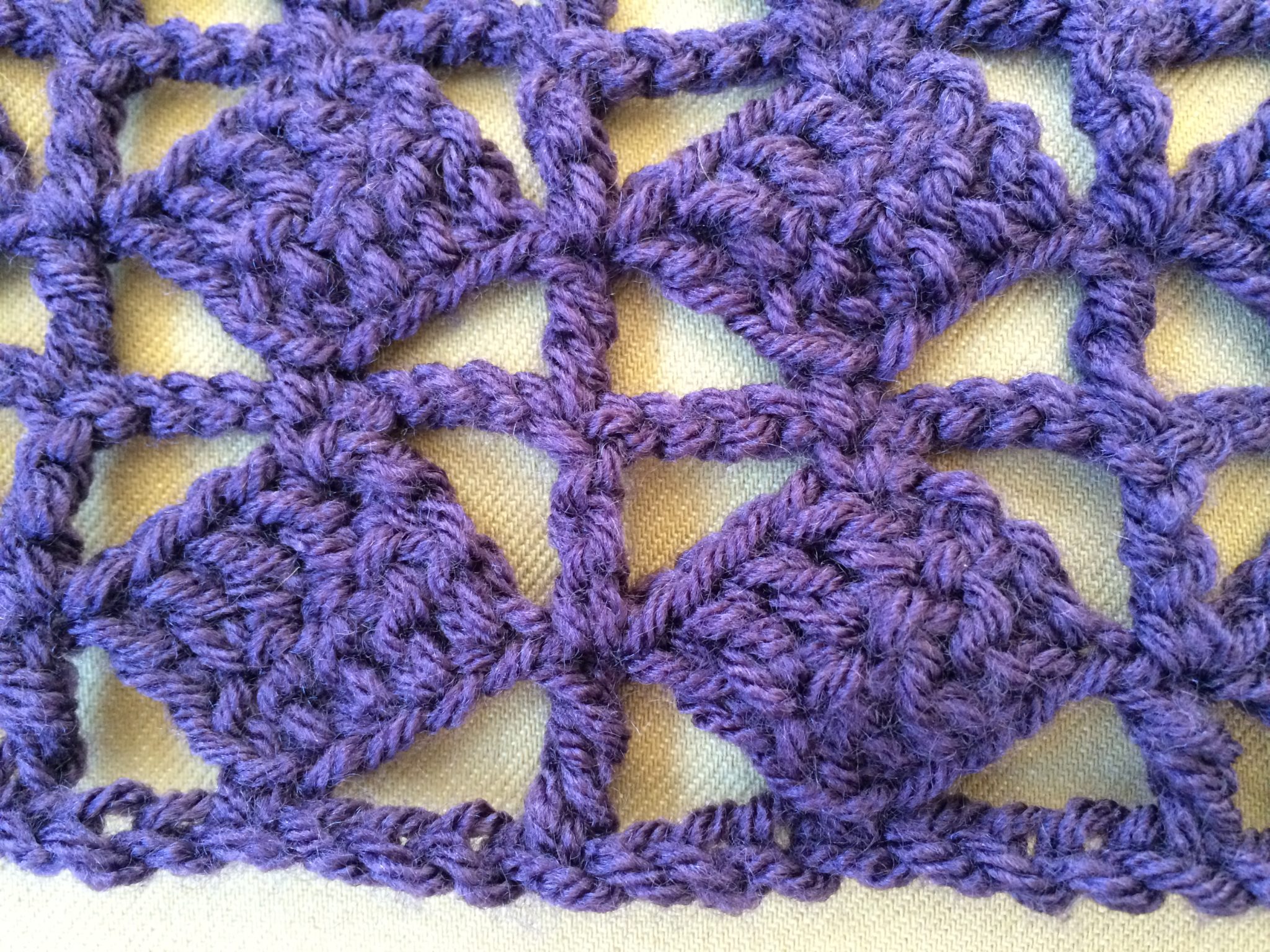
This pattern uses the clever trellis pattern and is made in two rectangles.

This pattern is at the intermediate level.

You need to know the following stitches:

  • Chain (ch)
  • Single crochet (sc)
  • Double crochet (dc)
  • Triple crochet (tc)


Poulton Poncho Pattern Cover-page-001Poulton Poncho

Make this easy two piece poncho as a quick intermediate project.

Pattern only

[purchase_link id=”2149″ style=”” color=”” text=”Download now”]

IMG_2490


Share the love

If you love using our original designed pattern, help us grow and please promote, like and share with photos of your finished garment, using the hash tag #OECpattern.

We would love to see your completed creations.


About Old English Creations original crochet patterns

Original designs

All our patterns are Old English Creations original designs created by our talented designers Alison and Lynn.

Each one is technically correct and uses US crochet terminology and not UK crochet terminology.

You can Buy Patterns

Our patterns are sold as a PDF downloads. This means you get a file sent to your computer and not an actual paper pattern. You have to print it yourself.

You can get Free Patterns

We have a few free pattern available and when you get them you can see the quality of our patterns.

You can print them on paper and you can read them on your iPad or phone.

How to use our patterns

You may sell the finished garments you make from our patterns.

Copyright

Our original patterns may not be reproduced by photocopy, posted on the web or sold without written permission from Old English Creations.

However, you may sell the finished item you created from this pattern.

Please respect the craft of the designers.

cropped-Rose.png


All About Crochet Ponchos

Ponchos

All About Ponchos

Ponchos are always on trend and make a good fashion staple.

Ponchos were originally made from a blanket with a hole cut in for your head. This simple method will still work, but it creates too much fabric around your body.

Your poncho should not lie out flat like a blanket, if it does it is way too big for you.

You can make a poncho from a triangle as well, by folding the points together and cutting a hole for you head. It is a simple piece of clothing.

Ponchos are typically pointed capes that have no sleeves and are closed at the front.

Modern poncho designs, with fronts and backs, are more flattering, streamlined and look good.


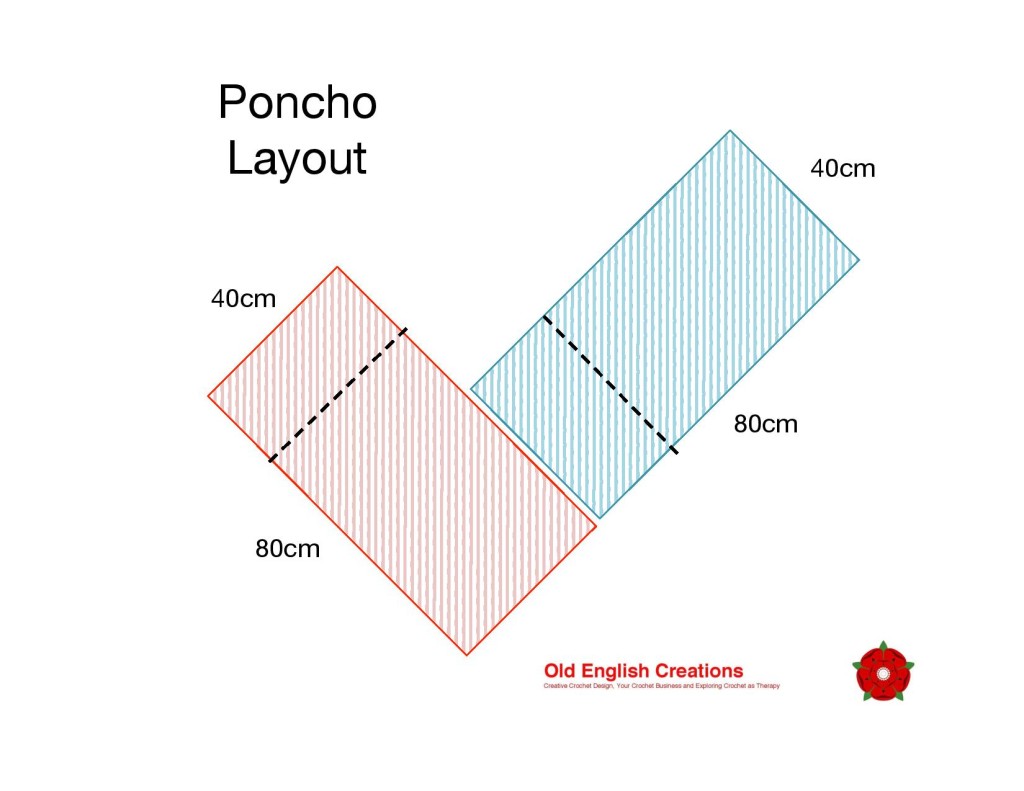
Poncho design (2 piece)

An easy poncho design is made by crafting two identical oblongs. In this design the the length is twice the width.

For example if the short side is 40cm then the long side should be 80cm. This would fit most women. For infants kids you can start with a 20cm to 30cm short side.

Then you sew them together offset and fold on the dotted line to join at the back as shown in the diagram below.

If you add a crochet border at the neck it will provide a better fit.

You can also create a polo neck to this ponch for cooler weather. If you don’t want so much fabric at the shoulder area you can add a drawstring that will make the whole garment adjustable.

poncho diagram 1-page-001

The two piece poncho design works well with stripes going lengthways. This draws the eye down towards the point thus elongating the look of elegance.

If the stripes go on the short side it makes the garment seem bulkier to the eye.

Any crochet pattern or striped stitches can be used to make the two simple rectangles and the possibilities are endless.

You can use granny squares as well.


How to Wear a Poncho

Ponchos are great for kids and women.

You can easily ride a bike in a poncho.

Wearing a poncho at an evening bar-b-que is a good option to a pashmina which you always seem to need to hold.

A poncho is easy to wear as it does not have to ‘fit’ the body well.

Your poncho should be snug but have some room.

Ponchos are good for travelling on the bus or plane as they are light and comfortable to wear.

A poncho is a casual garment at best.

This item is not part of your business, work wardrobe but will form part of your weekend easy-going clothes.

I like to have a new poncho every autumn and I will usually crochet one in the fall colours that season.

I sometimes make my daughters one each as well although they don’t always want one, that doesn’t stop me. 🙂

If you keep a poncho too long it can look ratty and tatty.

When it gets old give it to the dog as a blanket.

Poncho Size and Trim

Be careful of ponchos that hang too low in front.

You don’t want it flapping around you knees so you look like Clint Eastwood in a western movie.

The front point should lie at the same level (horizontally) as your finger tips when your hands are by your side.

Many ponchos have fringes which can be either all around the edge, are only tassels at the points, or only on two sides (left or right when facing front and back) of the point.

Poncho Colours

Watch out for garish colours and too many colour combinations in one poncho.

They look best with one, two or three colours only.

When you use colour in crochet you need to understand what works best.

If the darker colour is at the bottom and the lighter colours are at the top the garment is visually pleasing because the darker colours ‘ground’, or add visual gravitas, to the poncho at the widest part (the edge).


Crochet Poncho Patterns

I like making ponchos almost as much as I love crafting shawls and wraps. You can see my easy Poulton Poncho pattern and Preston Poncho pattern (details coming soon).


Author Bio

Alison Heathcote, a passionate crochet enthusiast and dedicated business blogger, combines her love for crafting and entrepreneurship to inspire and connect with others.

With a knack for transforming yarn into beautiful creations and a flair for sharing valuable insights about running a successful crochet business, Alison embodies the perfect blend of creativity and practicality.

More Articles

If you enjoyed this post and crochet is your thing, you may like some other crochet articles from our blog.

Repetitive Actions and Crochet

Repetitive Actions and Crochet

Author: Alison  -   Updated: February 2025 Repetitive Actions and the Comfort They Bring The Power of Repetition It Begins Repetition is a fundamental part of our human experience. From an early age, we find solace in familiar patterns. As children, we beg to hear the...

5 Steps to Your Prosperous Crochet Business

5 Steps to Your Prosperous Crochet Business

Author: Alison Heathcote   -   Published: February 2013   -   Revised: January 2024 5 Steps These are five of the most important steps you can take to begin your prosperous crochet business. As you transition from being a hobbyist crocheter, and you are on the road...

Trellis Pattern – Crochet Stitches

Trellis Crochet Stitch

Trellis

images-1A trellis is a wooden frame found in a garden on which plants can grow. Typically climbers and roses grow well on a trellis.

it is usually squares turned on their side to look like diamond shapes.

Trellises are also used to separate sections of a garden and to add interest in the ‘garden room’ designs so used nowadays.

Back and forth to make the diamond

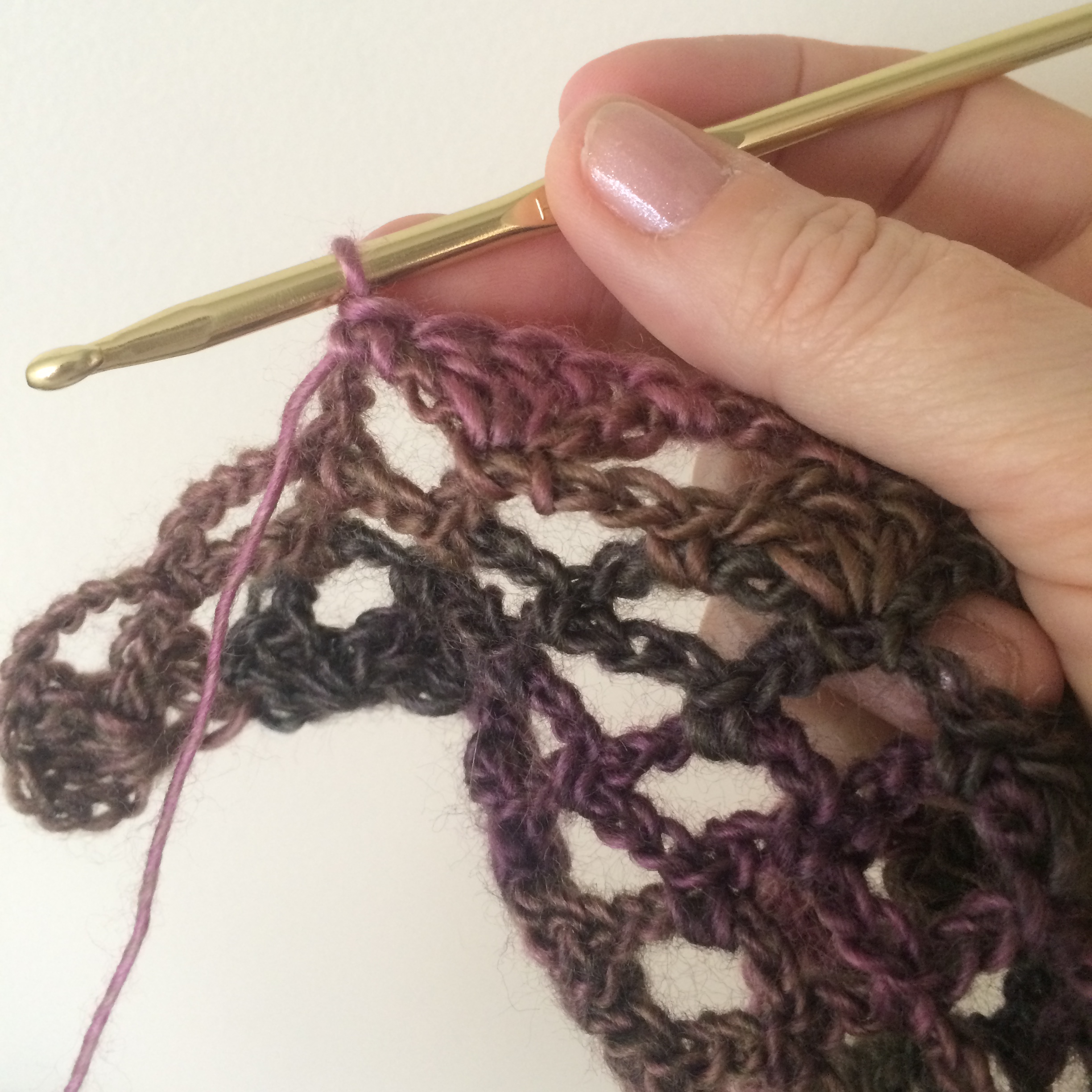
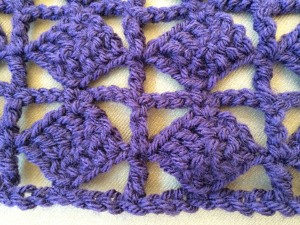
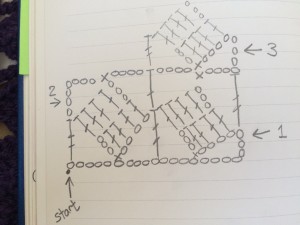
The trellis crochet pattern is an interesting stitch combination which is worked back and forth during the row.


IMG_2295

This means the work is turned during the creation of each block or diamond.


IMG_2296 (1)


More Articles

If you enjoyed this post and crochet is your thing, you may like some other crochet articles from our blog.

B&G: Blankies and Grannies

B&G: Blankies and Grannies

Author: Alison  -   Updated: March 2025 B&G: Blankies and Grannies The Joy of Crochet B&G? B&G is like the fun code I use for the main things which I create in crochet. Don't get me wrong, I can do all types of crocheting, but when it comes down to it, my...

Own Your Niche

Own Your Niche

Discover your crochet niche which is the special segment in the crochet industry that you know well and where you are skilled.

Crochet Granny Jacket Update #3


Update number 3 on the Granny Jacket

You can catch up on the basic granny square, and updates number 1 and update number 2 so you know where we are at.


IMG_2288

Finished jacket

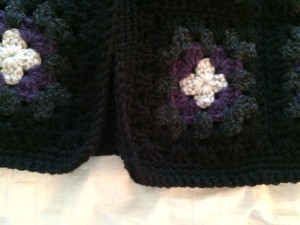
Here is the finished jacket with a border of five rows single crochet on both sleeves and the front and bottom edge.

There is a square folded into a triangle for the arm gusset which gives it a bit more room.


IMG_2290


Buttons or Toggles

This week I was at my local yarn store (LYS) and looked for suitable buttons for the jacket.

i want to have something a bit chunky and I was really looking for a natural wood or toggle type button.

I still haven’t decided just how many buttons I’ll need maybe three or five. I always choose an odd number it is somehow more visually satisfying to have a non even number.


IMG_2291

Final thoughts

This jacket has worked out well. It is slightly heavier than I had imagined and it will be really good on colder days, which is fine as winter draws on.

I like the granny square look and will probably do another one without sleeves in the taupe colour and lighter accent colours for the spring.

The pocket is a good feature and I’m even thinking of making an inside pocket higher up for my phone, you know.

5 Steps to Your Prosperous Crochet Business

Author: Alison Heathcote   –   Published: February 2013   –   Revised: January 2024

5 Steps

These are five of the most important steps you can take to begin your prosperous crochet business. As you transition from being a hobbyist crocheter, and you are on the road towards having a prosperous crochet business, your approach to your craft and money will change. 

The day you sell your first hand crafted item to a stranger (not your Mom or Granny) that is the day you become a micro business ownerHere are the five steps that will guide you towards building your prosperous crochet business.


Step 1. Make your First Sale

The first step is the hardest and that is to make your first sale. Whether it is your first pair of baby booties or your first scarf, the important things is to make the sale and to be in business. Sell your first item. Make your first sale. Take the cash and bank it.

Do not buy wine or new shoes to “celebrate” your first sale. The money that comes in from your first sale goes into the business and can be used for more supplies (wool and hooks), or it goes towards the purchase of stationery for your business cards, website support, or sheets of tissue to keep your garments clean.


Step 2. Know Who is Your Dream Customer

Know who your customer is. Is he or she in your neighborhood or nationwide? If you are offering goods that you ship, you have to approach your sales to a broader audience.

If you are making baby goods pitch that way, if you are doing women’s accessories like scarves and hats pitch that way.

You are not selling crochet but dreams. You are selling possibilities of how good someone will look after they have worn your items.

You are selling hope for your customer to feed a need in them to look good, tren
dy or sexy. You are not selling crochet.


Step 3. Own Your Niche

Your niche is the little spot where your goods lie in the general crochet market.

There are people making all sorts of crochet items but you will make one type of items and become the best there is in that area. This is your niche, a slim section of the broader market.

If you can crochet to a quality level that you can sell, and by that I mean it is good work technically, with a steady tension, and quality yarns, and your finishing is excellent with no hanging threads or knots, then that is quality crochet.

You may make amigurumi and this is your niche. You may craft hats and this is your niche. Your niche does not have to be a particular item although it often is. Your niche can be that you work in Irish crochet or using only fingerling. So the item is not the niche but the yarn or technique is your niche.


Step 4. Love Your Art

Crocheting is art. You have to love what you are doing. Some women will only crochet with top quality yarns because they believe “life is too short to use cheap wool.” Maybe so, but you have to love what you make. You have to love the texture, the color, the way the item drapes and the end result. As you make each hat or bag you are putting something of yourself into each piece. You have to love it. This makes a difference to the finished item. Believe me.

People shop on emotional impulses. They purchase things that speak to them either by the colour, texture or the item evokes a feeling of nostalgia and reminds them of what their granny used to give them years ago. Whatever the reason you have a better chance of selling goods that you craft if you love them from start to finish.

If you imbue love into your products the person who buys it will love it too, in fact you want her to love it and then want it.

Shopping is an emotional investment not just a cash exchange. Know that your potential customers have to fall in love with your hats or scarves before they will hand over the cash. In this way they feel better about buying from you and they don’t feel bad about the purchase when they get home.

Only make things you love and with yarns you love in colors and textures you love and others will love them too.

If you love your work you can talk about it and sell with passion and pride, and it becomes easier to sell. You have to believe that it is your best work and know you are being true to you art. Love your art.


Step 5. Be Generous of Spirit

You could spend one whole day making a hat and sell it for $10. So the hourly rate is weak at about $1 per hour. But that is not the point. Ignore the hourly rate and focus on the craft. If you buy your wool all at once and have a decent stash of good yarns you can plan your production of hats.

Every $10 you make has to go somewhere. Some goes back into the business to buy more supplies, some goes to tax (yes it does), some will come to you as your ‘pay’ and some can go to your giving program.

Your giving program is simply the plan you have to give to others. Those of us lucky enough to earn money can give something back to those less fortunate. It does not have to be much perhaps 10c on your $10 but it is important to be generous of spirit.

I give a percentage of my profits to local charities. I don’t do this every day or every week but towards December I have a sum that I give to people and causes I like to support to help them over their year end.

You need to have a giving plan otherwise you could be giving too much away if someone catches you for a donation in the shopping center car park. You may think you can afford to give $5 because yesterday you sold two hats but this will be an emotional give (and we all do it me perhaps more than most) not a planned give. Make a plan to be generous of spirit.

All businesses and big businesses do give to others. Look at the big companies and you can see their giving donations and the types of places they choose to support. You can’t help everyone so choose a sector in your community that appeals to you and make a giving plan that suits your income and your interest.


These are the first 5 steps to a prosperous crochet business. They can be used for any micro-business start-up. People all over the world have little businesses going on in their basements and backyards making things that they love and sharing their art with the world, and you can too.


Author Bio

Alison Heathcote is a passionate crochet enthusiast and dedicated business blogger. She combines her love for crafting and entrepreneurship to inspire and connect with others.

With a knack for transforming yarn into beautiful creations and a flair for sharing valuable insights about running a successful crochet business, Alison embodies the perfect blend of creativity and practicality.

Read more about Alison’s crochet journey.

More Articles

If you enjoyed this post and crochet is your thing, you may like some other crochet articles from our blog.

The Calm Crocheter: Newsletter

The Calm Crocheter: Newsletter

"The Calm Crochet" Newsletter Welcome to the Calm Crocheter Discover the art of crochet as self-care. At Old English Creations, we believe that crochet is more than a craft—it's a soothing ritual that nurtures your mind and spirit. Our Calm Crocheter newsletter is...
Crochet Basics

Crochet Basics

Author: Alison  -   Updated: November 2024 Crochet Basics Getting Started About Crochet Crochet is a vast subject. and you really need to know a few of the basics before you can really get into it. This post is just to go over a few of the basic points and in crochet...

B&G: Blankies and Grannies

B&G: Blankies and Grannies

Author: Alison  -   Updated: March 2025 B&G: Blankies and Grannies The Joy of Crochet B&G? B&G is like the fun code I use for the main things which I create in crochet. Don't get me wrong, I can do all types of crocheting, but when it comes down to it, my...

Crochet Granny Jacket Update #2

62 squares


Granny Jacket: Update Number 2

If you missed the start of the jacket (update number 1) and the granny square you can go back and read those posts. You can see the final post (update number 3) as well.

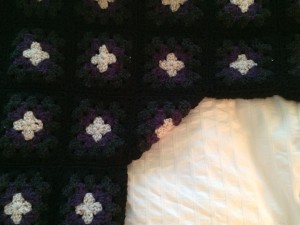
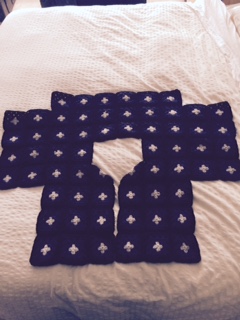
My crochet granny jacket is coming along now. I’ve sewn together 62 squares and two half squares, well triangles really, at the neck.


Yarn

So far I’ve used one ball of taupe, two balls of purple. two balls of grey and three balls of black.


Squares Crocheted

I will need 96 squares in total.

I always sew my squares together as I go. And I like to sew in the ends every colour change. So that’s quite a bit of sewing in, but I don’t like to have it all to do at the end.


Pockets

On the last row at the front (in the photo above) there are two pockets, one on each side in the middle square. Here I sewed two squares on top of each other with the gap at the top.

Pocket detail

Pocket detail

I will still add another row below the pocket, or maybe two. I’ll see. I am also toying with the ideas of making a pocket flap that goes above and maybe buttons down.

These are things that will become clearer as the garment grows.

I do enjoy making clothes with granny squares because you can take such a small item (one square) with you in you bag or even in you apron pocket as you cook dinner for the family.

I like to have a few projects on the hook at the same time:

  • A small one on granny squares like this jacket,
  • Perhaps a medium scarf for instance and then
  • A large piece like a blanket that I can’t take out of the house because it has grown too large to carry in my craft bag.

If you can’t get it on the bus it’s too big to take out. That’s where the granny square comes into its own. Portable and quick.

I will have the next update out soon.